Animated Social Gadget - Blogger And Wordpress Tips

Friday, 26 June 2015

Where Has Water Gone?

By Caroline Mateta
Our beloved water, where have you gone?
Rivers, lakes, underground water, where have you gone?
Water! Water! Where have you gone?
Our negative activities have made water disappear,
Forest destruction and bush fires, all contribute,
Waste management and poor land, use all contribute,
Water! Water! Where have you gone?
Destruction of catchment areas, wet land and springs,
Grabbers, corruption, overgrazing and overstocking,
Water! Water! Where have you gone?

Generation to come will ask, “Where has the water gone?”
Livestock and birds will wonder, “Where has the water gone?”
Wild animals and insects will wonder, “Where has the water gone?”
Water! Water! Where have you gone?
Increased human wildlife conflict, the order of the day,
Food insecurity and severe drought, the order of the day,
Water! Water! Where have you gone?
Water! Water! Save us from the increased poverty,
Water! Water! Save us from the loss of animals,
Water! Water! Save the generation from income,
Water! Water! Where have you gone?

Caroline Mateta is class 7 pupil at Ol-Jabet Primary School

Thursday, 25 June 2015

Smallholder farmers seek to benefit from school feeding programme

By Bob Aston
The Home Grown School Meal Programme has always aimed at increasing small-scale farmer’s access to the school feeding market by encouraging improved production practices among small-scale farmers and increasing direct purchases from small holders. Despite this many smallholders’ farmers have been unable to benefit from the programme.
It is this in mind that the SNV-Netherlands Development Organisation organized for a business opportunity meeting between twenty two (22) Home Grown School Meal Programme (HGSMP) schools in Ol-Moran Ward and Laikipia Produce and Marketing Co-operative Society at Sipili Catholic Church Hall in Laikipia West Sub County on June 24, 2015.
The meeting which was also attended by officer in charge of School feeding programme in Laikipia West, Kilimo Biashara Profilers, Arid Lands Information Network (ALIN), Ol-Moran and Sipili Area Education Officers (AEO), provided an opportunity for the farmer group to present their case on why they should be considered when tenders for HGSMP are being given by schools.
Cecilia Gacheri addressing the participants

Speaking during the meeting, Cecilia Gacheri, officer in charge of school Feeding Program in Laikipia West urged schools to give local farmers the first priority when giving out tenders for HGSMP as this will uplift the livelihood of the farmers who in most cases are also the parents.
She took participants through the HGSMP procurement procedures, responsibilities and roles of head teachers, selection of suppliers, delivery of food, reporting and monitoring and evaluation.
She urged the school meal program committees to strictly adhere to the laid down regulations in order for their students to continue benefiting from the project. Schools should also document how the funds are used and all documentation filed in the HGSMP file.
“Whenever funds are disbursed you should advertise for tenders. The tendering process should be transparent and all the applicants should be given an equal opportunity,” said Gatheri.
Aims of HGSMP include: providing equal opportunities of access to free education to Kenyan school going children from poverty stricken backgrounds; reducing short term hunger; improving the children’s’ health and nutrition status; improving the children’s’ attention span and cognitive ability; minimizing school dropout; and improving academic performance.
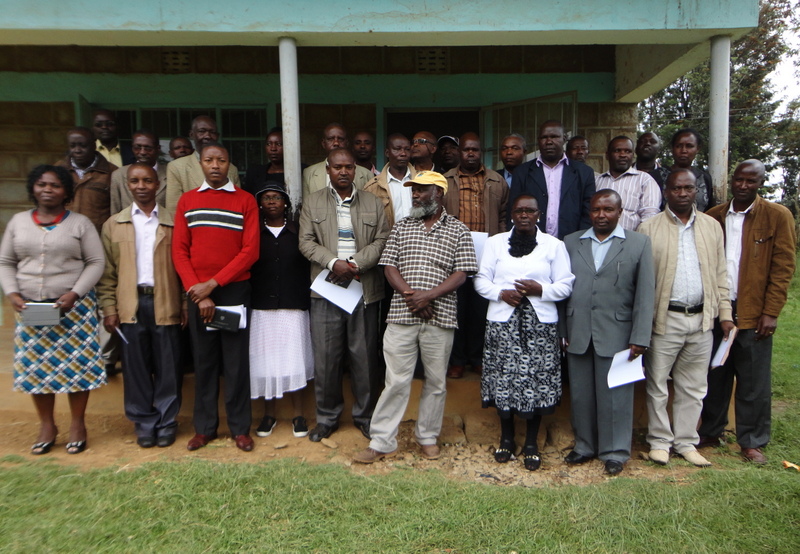
The participants posing for a photo
Francis Kanja, Chairman Laikipia Produce and Marketing Co-operative Society urged schools to consider the cooperative as they have met the selection criteria for small scale local farmer groups. He noted that the cooperative is able to supply cereals to schools throughout the year.
He said that the cooperative will soon open centers in Ol-Moran and Muhotetu and this will make delivering cereals to schools to be easier. He said that when schools award tenders to local farmers they will be enhancing local agricultural production thus increasing accessibility to markets by local small scale farmers leading to improved livelihood.
“Most of our members are drawn from Sipili and Ol-Moran. Promoting the cooperative will mean that you are promoting small-scale farmers who are members of the cooperative and who are also parents in your schools,” said Kanja.
At the inception of the Programme in 2009, the Government estimated Kshs. 7 per child per day to cover the cost of providing a mid-day meal. The schools are currently receiving Ksh.10 per child per day. The targeted primary schools are allocated funds by the Government of Kenya to cover the cost of food for a specified period based on the number of school children in these schools.

Wednesday, 24 June 2015

ALIN promoting adoption of Climate Smart Agriculture technologies

By Bob Aston
The effects of climate change is posing a great challenge to the production of food in Kenya. Smallholder farmers risk being overwhelmed by the pace and severity of climate change yet they are the mainstay of food production in the Country. To ensure a food secure future, farmers must adopt Climate Smart Agriculture.
Organizations like the Arid Lands Information Network (ALIN) have been promoting the adoption of Climate Smart Agriculture with an aim of strengthening communities’ resilience to impacts of climate change while conserving natural resources and also serving as an income generating venture for the farmers.
ALIN has strategically focused its efforts to improve the livelihoods of arid lands communities in East Africa through delivery of practical information using modern technologies with emphasis on climate change adaptation.
The International Non-governmental organization (NGO) operating in Kenya, Uganda and Tanzania has been working with other partners to improve access to good quality information and knowledge on climate change adaptation practices using publications like Joto Afrika. The organization has also been producing documentaries on climate change adaptation as well as publishing and disseminating articles on climate change adaptation.
ALIN in partnership with Act Change Transform (Act!), with financial support from Department for International Development (DFID) and Swedish International Development Cooperation (SIDA) has also implemented a climate smart agriculture project in Baringo, Laikipia and Kajiado counties.
This enabled ALIN to support Matwiku Horticulture Growers Self-help group in Githiga Ward in Laikipia West Sub County, Nolororo Women Group in Ilchamus Ward in Marigat Sub County and Emaiyawata Women Group in Magadi Ward in Kajiado County.
The foundation of the project was mobilization of the three groups to plant horticulture in at least an acre piece of land. Each group has installed a solar powered drip irrigating system and invested in appropriate water harvesting technology.
The three groups have been capacity built on installation of drip irrigation and management of the system. They have also been taught about water harvesting and storage, plant protection, harvesting, value addition and marketing, agroforestry, soil fertility improvement using manure, solar water pumping and integrated pest and disease management. They are now using drip irrigation technology to produce nutritious food.
The groups have realized drastic reduction in use of fuel for pumping water thus decrease of emissions has been experienced and less time spent irrigating the farm. Consequently this has helped to mitigate the effects of climate change as well as increasing food production.
They have also come to appreciate the various opportunities in food production using minimal water resources and appropriate technologies as an adaptation strategy to climate change.
To ensure that the technology reaches more farmers, field days are organized at each site to train communities on food production using appropriate and innovative climate smart Agriculture technologies.
During the field days, county leaders and policy makers are invited to learn and encouraged to develop policies that can strengthen small-scale farmers to produce more food. The county leaders are encouraged to plan with communities and allocate budget and replicate the Climate Smart Agriculture project.
To sustain the project each group has started a revolving fund from the profit made each season to enable group members to reinvest and expand their farm while enhancing each member to access climate smart agriculture technology for food production at family level.
The drip irrigation system makes it cheaper and easier for farmers to grow crops throughout the year without feeling the burden of climate change. Other benefits of the system include: reduced work load in the farm; conservation of water resources; minimal soil erosion; ability to use liquid manures; uniformity in crops grown; energy conservation and reduction of emissions since less fuel is used; reduction of leaching and nutrients loss; and fewer weeds.
Climate smart agriculture involves using technologies that can assist farmers in transitioning from traditional farming strategies to new climate-aware ones. These technologies focus on improved water management through water harvesting and use of drip irrigation, soil and water conservation measures, mulching, intercropping, introduction of drought tolerant crops and practicing agroforestry among others.
According to Food and Agriculture Organization, climate smart agriculture consists of three main pillars: sustainably increasing agricultural productivity and incomes (food security); adapting and building resilience to climate change (adaptation); and reducing and/or removing greenhouse gas emissions (mitigation), where possible.

Tuesday, 23 June 2015

Planning and budgeting is key to cooperative success

By Bob Aston
Proper planning and budgeting is key to growth of Laikipia Produce and Marketing Co-operative Society. Speaking during a two days financial management training organized by Arid Lands Information Network (ALIN) for the committee members of the cooperative on June 17-18, 2015 at Ng’arua Maarifa Centre in Ol-Moran Ward, Laikipia West Sub County, Ms. Roseline Ngusa, ALIN Finance and Administrative Manager said that the first step to an effective financial planning is developing and implementing a budget.
She said that a budget is a detailed summary of estimated income and estimated expenses for a given period and will be an invaluable tool that can help the cooperative to prioritize their spending and manage their money-no matter how much or little they have.
 “Planning and monitoring your budget will help you identify wasteful expenditures, adapt quickly as your financial situation changes, and achieve your financial goals,” said Ms. Ngusa.
She said budgeting will help the cooperative to limit how much money is spent on certain operations. It will help the cooperative to create a financial roadmap and they can use the budget to plan for future business growth and expansion.
Subsidized government fertilizer being offloaded into the cooperative store
She encouraged the cooperative to use variance analysis in planning, controlling and performance evaluation of the cooperative. She said that essentials of a budget include: plan expressed in monetary terms; prepared prior to a defined period of time; and is related to a definite future period of time.
Benefits of a budget include: the cooperative will be in control of its money; cooperative will be focused on its money goal; it is a communication device; it will provide the cooperative will an early warning for potential problems; will help in coordination of cooperative activities; is a control tool; and is a performance evaluator.
“Proper planning will provide venue and process for stating the direction and financial objectives of the cooperative. Setting up proper controls is also useful in ensuring that plans and objectives as laid down in the budgets are being achieved,” said Ms. Ngusa.
She said that the cooperative should be preparing different budgets which include: income and expenditure budget which outlines recurrent costs of the organization and shows where the money will come from; capital budget which shows a list of expenditure the cooperative intends to make for the coming years on capital projects; cash flow budget which is a key aspect of financial management of a business, planning its future cash requirements to avoid crisis of a liquidity; and activity budget which is prepared for a given activity.
ALIN has been offering various capacity building trainings to the cooperative members since its formation in 2013. This has enabled the cooperative to be among the leading cereal cooperatives in Laikipia West Sub County.

Monday, 22 June 2015

ALIN holds a financial management training for Laikipia Cooperative

By Bob Aston
The Arid Lands Information Network (ALIN) held a two days financial management training for the management and supervisory committee of Laikipia Produce and Marketing Co-operative Society on June 17-18, 2015 at Ng’arua Maarifa Centre in Ol-Moran Ward, Laikipia West Sub County. The training was intended to help the cooperative to come up with financial and procurement policies.
Mrs. Roseline Ngusa during the training
Speaking during the training, Ms. Roseline Ngusa, ALIN Finance and Administrative Manager said that the organization is keen in helping the cooperative enhance and develop controls that can strengthen and enable it to grow.
“We had realized capacity gaps in-terms of financial management and we decided to address this through the capacity building training. As ALIN we are keen in the success of the cooperative as they have a huge potential,” said Ms. Ngusa.

She noted that good business and business models can fail if consideration is not given to financial management as inefficiencies can be amplified over time, rather than addressed at the outset.
ALIN has been offering various capacity building trainings to the cooperative members since its formation in 2013. This has enabled the cooperative to be among the leading cereal cooperatives in Laikipia West Sub County.
“Financial management is an essential tool that will help the cooperative to grow. I am happy with the controls that they have set up. This is an indication that the cooperative management is determined to ensure that the cooperative costs are maintained at the lowest point,” said Ms. Ngusa.
Cooperative officer during the training
She said that the cooperative will now be able to provide financial planning information for the members as well as the various partners that they are working with. The financial management training is expected to help the cooperative management to know how the cooperative is doing financially and this will help them to make decisions to improve their operations.
“We have equipped the management with financial skills that will enable them to operate successfully. We expect that they will now be able to make their operations more profitable and efficient,” said Ms. Ngusa.
The cooperative management was trained on areas that included: governance; book keeping and book of accounts; stores management and procurement; marketing management; financial and cost benefit analysis; financial reporting; variance analysis and control systems; and planning and budgeting.
The Laikipia Produce and Marketing cooperative society emerged from the work undertaken by ALIN through Ng’arua Maarifa Centre with the support of the Ford Foundation’s Expanding Livelihoods for Poor Households Initiative (ELOPHI). It is a vehicle for bulking, marketing and trading in farm commodities and other products and services.

Thursday, 18 June 2015

ALIN connecting the unconnected through Ng’arua Maarifa Centre

By Bob Aston
Recognizing access to information as a basic human right, Arid Lands Information Network (ALIN) has been innovatively using community-based Information and Communication Technology (ICT) facilities to enable some of the most remote communities to access information.
ALIN has strategically focused its efforts to improve the livelihoods of arid lands communities in East Africa through delivery of practical information using modern technologies with emphasis on agricultural practices and climate change adaptation through Ng’arua Maarifa Centre.
Ng’arua Maarifa Centre located in Ol-Moran ward of Laikipia West Sub County has been facilitating learning and skills transfer among communities embracing a culture of knowledge sharing that has enabled individuals to make informed decision on their livelihood.
The Centre is equipped with computers with internet connectivity and contain information and knowledge products focused on small-scale sustainable agriculture, climate change, sustainable land management (SLM), markets and natural resources management (NRM).
The Maarifa Centre has been offering free services that include: Library services; E-government services; multimedia content; internet access; citizen journalism training; ICT training; advisory services; publications like Joto Afrika, Baobab and Laikipia Mali Asili; and Sokopepe.
The Maarifa Centre has also hosted a NRM and SLM knowledge sharing Mazingira Centre. The Centre has been instrumental in sharing knowledge with farmers through organizing open learning days, exchange visits, video documentations and articles aimed at farmers and pastoralists.
With the recent government regulation on enabling access of government services on digital platforms, the Maarifa center has become vital in allowing close to 8,000 community members access e-Government services that include: downloading Personal Information Numbers; pay slips; making online tax returns; online registration of exams; online job application; and County development plans.
ALIN realized that many rural communities lack the skills to tap into the potential ICT field hence it has focused in the development of ICT resources at the Maarifa Centre. This is aimed at empowering people to use technology to promote community development and bring services such as skills development, e-commerce and e-learning closer to the people.
The uniqueness of Maarifa centers has led to winning of various prestigious awards notable the 2011, Access to Learning Award by the Bill & Melinda Gates Foundation. The Maarifa Centre through its blog Laikipia Rural Voices also won the Youth in Agriculture Blog Competition (YoBloco Awards) in 2014.
In developing people’s skills and creating ICT opportunities, ALIN ensures that people are put before technology and research and deploy ICTs that blend with traditional information systems.  This strategy is informed by the following factors; communities in arid areas lack the means to access and to share transformative knowledge, they do not have adequate skills and competencies to access needed knowledge and there is lack of knowledge exchange nodes in arid lands of East Africa.
Communities have been provided with a chance to improve their farming techniques and technologies through full access of information and assistance at the Maarifa Centre, something they were not privileged to access before.

Monday, 15 June 2015

Investing in soil during World Day to Combat Desertification

By Bob Aston
The World Day to Combat Desertification (WDCD) has been observed since 1995 on 17 June to promote public awareness relating to international cooperation to combat desertification and the effects of drought. The focus this year is “attainment of food security for all through sustainable food systems.” With the slogan, ‘No such thing as a free lunch. Invest in healthy soil’, the 2015 observance calls for countries to celebrate land by preserving and improving its fruitfulness.
2015 WDCD slogan
This year’s WDCD lays a lot of emphasis on issues that include: a change in land use practices through smart agriculture and adaptation to changing climate, especially in the dry fragile parts of the world where food shortages are becoming more and more severe; and access to technology and land rights for small holder farmers who safeguard the environment and meet the food needs of millions of households, especially among the poor.
Other issues include: a balance in the land use for ecology and consumption, drawing on the best practices; more investments in sustainable land practices so that sustainable food systems become the normal practice; and more effective action on desertification whose effects on security, peace and stability are invisible yet real for the affected countries due especially to food and water scarcity and environmentally forced migration.

WDCD is a unique occasion to remind everybody that desertification can be effectively tackled, that solutions are possible, and that key tools to this aim lay in strengthened community participation and co-operation at all levels.
According to the United Nations Convention to Combat Desertification (UNCCD), hunger is most prevalent in the developing countries dryland areas where water retention is poor, and the land is highly vulnerable to natural and human destructions.
UNCCD aims to sensitize the public to the fact that desertification, land degradation and drought dramatically affect the biodiversity resident in the soil. What people do to the soil determines the quality and quantity of the food they eat and how ecosystems serves them. The increasing ecological interdependence also means enhancing soils anywhere enhances life everywhere.
According to Food and Agriculture Organization of the United Nations (FAO), healthy soils are the foundation for food, fuel, fibre and even medicine. FAO approximates that 33 percent of the global soil resources are degraded due to erosion, compaction, soil sealing, salinization, soil organic matter and nutrient depletion, acidification and pollution
This year’s event in Kenya will be celebrated at Yatta Sub County in Machakos County. The event will seek to promote increased investments in sustainable land management practices to ensure the establishment and maintenance of food systems.

Friday, 12 June 2015

Manyatta rain water harvesting technology quenching Laikipia County’s thirst

By Njenga Kahiro
Like many areas of central and north of Laikipia County, Segera area faces water scarcity. Laikipia County lies on the leeward side of Mount Kenya and therefore receives low rainfall. Rain water is the cheapest and cleanest water. But how can it be captured by those who live in a grass thatched house and who are likely to relocate if the pasture diminishes?
Two local community based organizations (CBOs), Segera Jirani na Mazingira and Sugutan have with the help of Zeitz Foundation and funding from United Nations Development Program under its Global Environment Facility Small Grants Program (UNDP GEF SGP) been implementing the Manyatta Rain Water Harvesting Project in Laikipia County.
In keeping with the Zeitz Foundation’s tradition of finding innovative solutions to everyday problems, partners like Engineers Without Borders USA and Sugutan CBO have been at the frontline of this innovation piloting a novel rainwater harvesting model for Samburu Manyattas in the North of Segera.
After many deliberations, rain-water harvesting through manyattas eventually became a reality. The challenge was how to ensure a household gets clean rainwater irrespective of whether the house is grass or mud roofed.
The project implementation team, together with partners – Engineers Without Borders USA - have come up with an innovative solution involving: a water proof poly tarp; wood guttering frame; first flash filtering; above ground capture; and underground storage with a hand pump to draw the water from the underground tank.
Picture of a Manyatta rain water harvesting technology

Unlike most rain water harvesting setups, the principle in this innovation is not to force the Samburu households to change their building architecture but rather to incorporate the tradition in designing the innovation.
Challenges
On average, a household would need around 20,000 litres of clean water annually but the roof surfaces of their houses would not collect that much water. The cost of doing 20,000 litres storage is also prohibitive. Another challenge is when one water source is shared by many households. It is therefore often a source of conflict when some households want to draw more than the agreed share. Another challenge is when some in the community fail to conform to agreed use of water. An example is when some use the clean rain water for washing or watering livestock while the agreed use is cooking or drinking.
Gender dimensions
In Sugutan village, women who are the traditional builders in this community, have learnt how to fix the roof and the guttering. The system is completely plug and play, and if the household moves, the owner can set up the same system in their new homestead as long as it adopts the same dimensions.
Replication of the innovation
Recently, a much more improved system developed with technical input from China’s Gansu Research Institute for Water Conservation (GRIWC) has been introduced resulting in more households accessing clean water.
Engineers from GRIWC completed a project with a similar approach at Greater Segera and the plan is to monitor the two different designs and see which is most effective for scaling up and introducing more broadly to improve sustainable water management in Laikipia County. African Wildlife Foundation (AWF) has made requests to share the knowledge and explore its application at institutional level.
Some schools namely Uaso Nyiro Primary School which uses 350,000 litres and Endana Secondary School 1.2 million litres of water annually have used the innovation to become self-sufficient in water.
In addition, the newly finished Samuel Etoo Football Academy adopts the same water harvesting approach and is now collecting 1.4 million litres from the roof of a sports stadium, a canteen and girls dorm. More exciting, perhaps, is the combination of rain water harvesting and conservation agriculture in one site. This package is truly set to change the face of dry land communities in Central and North Laikipia.
Njenga Kahiro is the Laikipia Programme Manager, Zeitz Foundation – Kenya, Email: njenga@zeitzfoundation.org, Tel: +254 061 2309996, 0721475876

Tuesday, 9 June 2015

Smallholder farmers urged to embrace kitchen garden

By Bob Aston
Smallholder farmers from Wangwachi area of Ol-Moran Ward, Laikipia West Sub County have been urged to embrace kitchen garden farming a way of improving their livelihood. Speaking while training farmers in the area on June 3, 2015, Mrs. Elcy Kigano, Ol-Moran Ward Agribusiness officer said that farmers are able to get food throughout the year from their kitchen garden.
The Laikipia County government recognized Kitchen garden as a way of empowering communities at the household level. The County government through the County Development Authority is implementing Household Economic Empowerment Programme (HEEP) with an aim of reducing poverty level in the county.
Dry grass being added on top of the hardcore

Kitchen garden is a simple method of farming that produce fresh fruit, vegetables’ and herbs for delicious, healthy meals. The objective of training farmers on kitchen garden include: to ensure households are food and nutrition secure; to ensure good management and profitable utilization of available resources is promoted in the county; and to promote profitable agribusiness in Laikipia County.

Mrs. Kigano said that they are training farmers on establishment of wet garden as they are less capital intensive, use less water, one is able to realize high production and they are easy to manage. Materials required include; Polythene paper, stones, hardcore, ballast, dry grass, manure, water and watering can.
“Growing your own vegetables is both fun and rewarding. All you really need is to get started. It is appropriate to start with what you eat and you should also consider the nutritive value of the crops that you plant,” said Mrs. Kigano.
Selection of sight will determine the success of the kitchen garden. The garden should be near a source of water, should be away from shading tree, should not be water logged and weeds and grass should be cleared in the surrounding areas.
Preparing a kitchen garden
Soil mixed with manure being added
Measure the land where the kitchen garden will be located. The width of the garden should be 1m while the length will depend on the size of the land. Then put top soil and sub soils aside separately. Add well decomposed manure to the top soil to a ratio of one to one. Layout the polythene paper on excavated ground.
Ballast should then be added on top of hardcore then dry grass. Well mixed manure and top soil should then be added. The bed should then be watered and let to rest for two hours after which the seedlings should be planted at the spacing of 9 inches to 1 ft. Stones should be added around the bed to ensure the polythene covers the garden well. The garden should then be watered twice per week until the seedlings are well established then once per month after establishment. That is when the crop has developed deep root structures.
Planting and maintenance
The seeds should be planted in a row, the lines must face where the sun rises from. The lines should be spaced 15 cm apart using a string to make straight line. The lines should be 2 cm deep.
The nursery should be watered whenever necessary to avoid over watering the nursery bed for it can cause stress and compaction. The seed bed should be mulched to provide enough shade for the crops while weeding should be done regularly.

Monday, 8 June 2015

Promoting social inclusion of gender and youth in Maize value chain

By Bob Aston
Promoting social inclusion along the maize value chain will ensure women, men and youths benefit equally from agri-business along the value chain. Speaking during a two days’ workshop organized by the Agricultural Sector Development Support Programme (ASDSP)-Laikipia, on June 5-6, 2015 at Olympia Hotel in Nyahururu, Laikipia County, Leah Njeri, SNV-Netherlands Development Organization Senior Governance Advisor, Procurement Governance in Home Grown School Feeding (HGSF) noted that women, men and youths will be able to have equal access to resources and opportunities in the value chain.
The workshop was attended by 43 maize value chain groups as well as SNV and Arid Lands Information Network (ALIN). ASDSP seeks to promote gender and youth inclusion along the maize value chain through input supplies, production, bulking and transportation, storage and marketing.
A woman selling cereals

“We need to acknowledge socially constructed roles and responsibilities assigned to women and men in a given culture or location. We also need to assess implications for women, men and youth of any planned actions and incorporate this in the value chain,” said Leah.
She noted that assessing social inclusion along the maize value chain entails recognizing that gender and other differences are socially constructed and may affect participation of men, women and youths unequally in the value chain.
“It is important to identify barriers to men, women and youth participation like community beliefs, economic status, infrastructure, attitudes and policy barriers. This will require developing strategies to promote more gender-equitable and inclusive practices along the value chain,” said Leah.
She noted that the current women participation in the value chain indicates that they are bulk producers, they are usually appointed as treasurers in groups because they are easier to manipulate and they are less prone to corruption. They are also rarely elected as group chairpersons.
Meanwhile, youths are missing in the value chain due to low returns from farming, they do not own land, the Country’s formal education is oriented towards white collar job, fear of traditional farming methods which are labour intensive and financial constraints and lack of collateral to access financing.
Two women and a youth weeding
“Inclusion of women in leadership and decision making positions particularly in production, input supplies and marketing can help improve the livelihood of women,” said Leah.
Constraints limiting effective women participation along the value chain include: women are engaged in domestic chores; women have to seek permission from their husbands; lack of confidence on their ability to hold leadership and strategic positions; low literacy and exposure compared to men; lack of land ownership; and financial constraints; and lack of collateral to access financing.
Strategic entry points for promoting women and youth participation include: farming using modern farming techniques and technology; commercialization and involvement of youths in transportation using motorbikes; use of ICT technologies especially in marketing; provision of extension services to farmers; inclusion of women and youths in leadership and decision making positions.

Laikipia maize value chain groups form an umbrella organization

By Bob Aston
The Agricultural Sector Development Support Programme (ASDSP)-Laikipia, organized for a two days’ workshop on June 5-6, 2015 at Olympia Hotel in Nyahururu, Laikipia County for 43 Value Chain Groups to form an umbrella maize organization in the County.
The workshop which was also attended by SNV-Netherlands Development Organization and Arid Lands Information Network (ALIN) saw the maize value chain groups form an umbrella organization called Laikipia Maize Value Chain Development Network.
Speaking after being elected the Chairman of Laikipia Maize Value Chain Development Network, Mr. Waweru Kanja noted that although farming is a lucrative business few farmers benefit from farming due to exploitation by traders.
The elected officials posing for a photo with ASDSP,SNV,ALIN and Maize PMT Chairman

 He promised to spearhead the umbrella organization in a professional manner and to ensure that the value chain groups enjoy economies of scale through joint marketing and bulking. He thanked Laikipia farmers for prioritizing maize value chain through ASDSP. This he said has enabled many farmers to benefit from post-harvest management training.

“I have been the Chairman of Laikipia Produce and Marketing Cooperative Society for two years and we have managed to address the challenges that our members have been facing during production. I believe that we will address marketing issues through the umbrella organization,” said Mr. Kanja.
On her part, Mrs. Loice Mary Nyawira, Vice chairperson, Laikipia Maize Value Chain Development Network promised to dedicate her time in ensuring that maize farmers in the County enjoy better returns compared to previous years. She said that she will ensure that the umbrella organization embraces new technologies for marketing as well as production.
“We will strive to ensure we identify buyers for the value chain groups. Access to market information is also a priority for us as this has been a challenge for many farmers,” said Mrs. Nyawira.
Other officials elected included: Robert Ndungu-Secretary; Martha Kimani- vice Secretary; and Veronica Kemunto-Treasurer. Members are Andrew Ngari Kigotho, Peter Maina, Francis Gitonga and Joseph Gathungu.
Mr. Kanja being given the umbrella organization registration form
The officials were drawn from the six wards of Laikipia West Sub County namely: Ol-Moran, Igwamiti, Githiga, Salama, Marmanet and Rumuruti.
ASDSP and other stakeholders will facilitate market linkages between the umbrella organization and other structured market players to ensure smallholder farmers who are members of different maize value chain groups improve their livelihoods.
The umbrella maize organization will play a big role in improving organization and co-ordination of the maize value chain in Laikipia County as well as championing the collective interests of the value chain players. This is geared towards enhancing a viable and equitable commercialization of the maize value chain.
ASDSP and other partners including; Ministry of Agriculture, Livestock and Fisheries, Eastern African Grain Council (EAGC), Kenya Agricultural and Livestock Research Organization (KALRO), SNV and ALIN are implementing a maize concept note titled “Formation, Legalization and Training Maize Value Chain Groups on Post-harvest Management.” The concept note seeks to address the high post-harvest maize losses in the county by reducing it to less than 15 percent.

Friday, 5 June 2015

Kajiado County gender and energy forum a success

By Noah Lusaka
The Kajiado County stakeholder’s forum on Gender and Energy was successfully held on 28th May 2015 at the ACK hall in Kajiado town. The forum that was convened by ENERGIA Kenya Network through Arid Lands Information Network (ALIN) and practical Action (PA) was cordially graced by the County Executive Committee member for health Ms. Glady's Marima and the chief officer in charge of roads transport and Energy.
The county officials encouraged civil society and the private sector to continue supporting communities with innovative energy solutions. 'This is a very important forum to enhance coordination of gender and energy activities in Kajiado given that its women and children who really suffer fetching for wood fuel and cooking in smoky kitchens' remarked Ms. Marima.

In attendance were 35 stakeholders drawn from within the Kajiado county government, civil society, private companies, community based groups. The forum offered a platform for stakeholders to discuss gender and energy issues affecting Kajiado citizens and to develop a roadmap for future Gender and Energy activities for inclusion in the County CIDP.
Some of the participants posing for a photo
Among the stakeholders were Mr. John Sironik of Kiserian slaughter house who indicated their firm is at advanced stage in commercializing packaged biogas for cooking. He requested the county to subsidize the gas for communities to access at a lower cost of kshs. 300/= per cylinder of 6kgs.
Anika Jane of Green Energy Africa ltd demonstrated a simple and affordable solar energy option for multipurpose uses at family level. The stakeholders proposed innovative ideas in addressing gender and energy issues within the county focusing on the five sectors of Education and health, urban development, agriculture and water resources.
Madam Esther Shena who is the Gender Manager shared progress made so far in developing a county gender policy. The participants also shared experiences on gender and household energy access and got to understand the global initiatives on SEALL and implications on County energy plans.

Thursday, 4 June 2015

Seven billion dreams.One planet.Consume with care

By Bob Aston
The World Environment Day (WED) is celebrated every year on 5th June to raise the global awareness about the importance of the healthy and green environment in the human lives, to solve environmental issues by implementing some positive environmental actions as well as to protect nature. It is run by the United Nations Environment Programme (UNEP).
The WED theme this year is "Seven Billion Dreams. One Planet. Consume with Care." The theme is emphasizing the need to embrace sustainable exploitation of resources and live within the planet’s resources. It also underscores the importance of the environment as a common good that provides livelihood to all mankind.
Pupils of Kio Primary in Laikipia West plant trees during a past WED celebration

The well-being of humanity, the environment, and the functioning of the economy, ultimately depend upon the responsible management of the planet’s natural resources. Evidence is building that people are consuming far more natural resources than what the planet can sustainably provide.
WED celebration began in 1972. Over the years it has grown to be a broad, global platform for public outreach that is widely celebrated by stakeholders in over 100 countries. It also serves as the ‘people’s day’ for doing something positive for the environment, galvanizing individual actions into a collective power that generates an exponential positive impact on the planet.
WED is an opportunity for everyone to realize not only their responsibility, but also their power to become agents of change. Although individual decisions may seem small in the face of global threats and trends, when billions of people join forces in common purpose they can make a tremendous difference.
According to Achim Steiner, UN Under-Secretary-General and UNDP Executive, with the global population forecast to reach 9 billion by mid-century, demands on the depleted resources will only compound, exacerbated by increasing pollution, conflicts over resources, and the effects of an atmosphere being rapidly heated by human greenhouse gas emissions.
Pupils make balls by recycling plastic bags
Consuming with care means living within planetary boundaries to ensure a healthy future where our dreams can be realized. Human prosperity need not cost the earth. Living sustainably is about doing more and better with less. It is about knowing that rising rates of natural resource use and the environmental impacts that occur are not a necessary by-product of economic growth.
Many of the Earth’s ecosystems are nearing critical tipping points of depletion or irreversible change, pushed by high population growth and economic development. Focusing on forest management, reducing greenhouse effects, promoting bio-fuels production, promoting coral reefs and mangroves restoration, use of solar water heaters, energy production through solar sources as well as developing new drainage systems are some of the ways of ensuring green and healthy environment.
In Kenya, Narok Town in Narok County has been selected as venue for the national WED 2015 event. The area is home to important ecosystems including the Maasai Mara Reserve, Maasai Mau forest block as well as the Mara River which is the life line of the region. These ecosystems are under constant threat from human encroachment and can be depleted if there are no concerted efforts to conserve the same.

Tuesday, 2 June 2015

G-BIACK scaling up best Grow Biointensive agriculture practices in Thika

By Bob Aston
The last day of the Participatory Ecological Land Use Management (PELUM) Association Annual General Meeting (AGM) held at the Sustainable Agriculture Community Development Programme (SACDEP-Kenya) Training and Conference Facility in Thika on May 28-29, 2015 saw the 70 participants from more than 40 member organizations visit four different sites for a learning, exposure and exchange visit.
Participants were able to visit sites by Resources Oriented Development Initiatives (RODI), Sustainable Agriculture Community Development Programme (SACDEP-Kenya), Grow Biointensive Agriculture Centre of Kenya (G-BIACK) and Organic Agriculture Centre of Kenya (OACK).The exposure visits provided the participants with an opportunity to learn best practices as well as areas that need improvement.
Participants at the Maria Magdalena Special School kitchen garden

The G-BIACK visit saw a team of 14 participants travelling to the outskirts of Thika to visit Maria Magdalena Special School in Munyu area of Gatuanyaja Ward. G-BIACK has been supporting the special school which has 100 students for more than seven years.
The school has been supported to establish a kitchen garden and also use of drip irrigation. The half-acre kitchen garden has crops that include; Tomatoes, beans, kales, spinach, bananas, cassava, amaranth, pawpaw and sweet potatoes.
The students and school administration have been taught on production of nutritious food using Grow Biointensive Agriculture. The school has now been able to save more than 70 percent of the total cost used to purchase food as they are now able to feed all the students and even sell the surplus to the surrounding community members.
G-BIACK has also erected a water tank stand with an elevation of two metres above the ground which supports a water tank with a capacity of 1000 litres. The students are able to spend less time irrigating the kitchen garden as they only have to fill the water tank then water will flow through gravity to the different areas of the kitchen garden.
“We decided to help the school to establish the nutritious kitchen garden and also to enable them sell the surplus to community members so that the school can have a source of income,” said Mr. Samuel Nderitu from G-BIACK.
The students are also able to produce their own organic manure through vermiculture. A vermi composting section has also been set up where the students deposit farm and poultry waste. This later decomposes to form organic manure.
Participants seeing a demonstration of the pest control measures
The special school field visit culminated in a tree planting session before the participants travelled to Gladys Wandia’s farm, Chairperson Tumaini Women Self-help group. G-BIACK started supporting the group 6 years ago. The 23 member group consisting of women between 70-100 years has been raising orphan children.
Initially the members predominantly grew maize and were using DAP fertilizer but over the years the farm yields started reducing. Most of the members were unable to sustain their families as well as the orphan children.
“G-BIACK has been a blessing to us. They not only taught us about Grow Biointensive Agriculture but we also learned about the importance of diversification. This has enabled us to support our families and the orphans as well as sell surplus produce to other community members,” said Mrs. Gladys Wandia.
Mrs. Wandia has planted crops in a five acre piece of land that include; pumpkin, beans, maize, thorny melon, sorghum, cassava, spider plant, bananas, black night shade, sweet potatoes, hibiscus.
G-BIACK has been giving the group members special seeds for different crops. They have also been trained on how to make organic fertilizer and how to control pests using farm products.
Some of the participants arriving at the G-BIACK head office
Later on in the day the participants visited G-BIACK head office. The head office consists of various sections namely: library; seed bank; women program exhibition; women centre; vermi composition section, a apiary; fish pond; nursery; Livestock research centre; research area; and propagation house. The organization has more than 48 varieties of seeds and they have planted more than 30 different varieties of plants.
G-BIACK is a community organization that trains and promotes Grow Biointensive Agriculture and community development technological options and initiatives among the small scale farm holders in Kenya. It was initiated in September 2009 to respond to the problems associated with increasing levels of poverty that is associated with food insecurity in the Country.
“Our mission is to seed a sense of empowerment and self-reliance in communities that lead to improved food sovereignty and livelihood and a healthier environment. We also promote and develop ecologically viable development strategies for sustainable and quality livelihoods,” said Mr. Nderitu.
Other services provided by G-BIACK include: ICT training; library services; food and nutrition, appropriate technology; health and sanitation; and one goat per family project.
The exposure visit enabled the participants to share knowledge on Grow Biointensive Agriculture. The practical demonstrations proved useful as some of the participants carried some of the crops to try and see if they can replicate the same in their own organizations.

Sunday, 31 May 2015

Importance of timely harvesting in reducing post maturity losses

By Bob Aston
Farmers have been urged to ensure timely harvesting in order to minimize post maturity losses in the field. Speaking during a workshop organized by Agricultural Sector Development Support Programme (ASDSP) for members of Laikipia Produce and Marketing Co-operative Society at Ng’arua Maarifa Centre, Laikipia West Sub County on May 26, 2015, Mr. James Kamau, Ol-Moran Ward Agriculture Officer said that maize should be harvested at the right stage depending on the intended use.
“Although time of harvesting fall under pre harvesting period, its effect has direct linkage to post harvest challenges. During harvesting, care should be taken to make sure that the produce is not affected in quality or quantity,” said Mr. Kamau.
Dry maize ready for harvesting
He said that physiological characteristics for mature maize include: yellowing of most of the leaves; leaves drying up; yellowing and drying up of the husks; maize cobs begin to droop on the stalk; maize grains acquire a shiny surface; grains becomes too hard and uncomfortable to chew when it is roasted for eating; and black layer develops at the base of grains.

“Maize harvesting should start once the maize attains its physiological maturity. This is usually between 90-180 days depending on the variety and agro-ecological zone,” said Mr. Kamau.
Delayed harvesting after physiological maturity increases chances of storage pest infestation, shattering, damage by birds, wild animals and losses due to theft, thus reducing the quality and quantity available for consumption and sale. Delayed harvesting may also cause a problem as the fields need to be prepared for the next crop.
Harvesting should be timed to coincide with dry weather as wet harvesting enhances rotting of produce. During the wet season break the stem just below the cob and hang it downwards to prevent water entry into the cob. Use of maize varieties with ear rot resistance, ear dropping traits and closed husk cover is also recommended to reduce maize ear rot.
Stooked maize in field
“Early harvesting as soon as the crop reaches physiological maturity will be heavier than if left in the field to dry longer. This results in significant damage to the grain and makes it more difficult to market commercially,” said Mr. Kamau.
Method of harvesting
Cut the maize stalks and stack them in pyramid-shaped heaps (stooking). At this time the grain moisture content is around 26%. Stooking is important before ears are removed from the stalks to allow sun and air to dry the cobs for easier dehusking. Stook maize for two or more weeks to dry in the field (grain moisture will reduce to 18%).
Ensure that stooked maize does not overstay in the field because of theft cases. In such cases, stack the cut stalks in pyramids near your house. After the maize has dried, remove the ears from the stalks and dehusk the ears manually
During harvesting, avoid dropping of dehusked cobs on the bare ground because it increases the chances of fungal/Aflatoxin contamination. Dehusked cobs should be placed in clean containers, mats, tarpaulins or directly into bags to avoid contamination. Separate clean maize from rotten or pest infested cobs. Make good arrangements of transporting clean cobs from the field to the store.